

Guide to Machine Learning

Recently we added post about Data Labeling “LLMs“, and today we start Introduction to Machine Learning Basics, Machine Learning is a fundamental concept in artificial intelligence and data science, involves the use of algorithms and statistical models to enable machines to perform a specific task, making it an essential part of machine learning basics and a great starting point for machine learning for beginners. Machine Learning is a type of artificial intelligence that provides systems with the ability to automatically learn and improve from experience without being explicitly programmed. This introduction to machine learning basics will provide a comprehensive machine learning tutorial on the subject, covering the key aspects of machine learning.
Understanding the Principles of Machine Learning
Machine learning, a subset of artificial intelligence, involves the use of algorithms and statistical models to enable machines to perform a specific task. Machine Learning is a type of artificial intelligence that provides systems with the ability to automatically learn and improve from experience without being explicitly programmed, forming the foundation of data science and a crucial part of machine learning basics. This introduction to machine learning basics will explore the fundamentals of machine learning for beginners, providing a comprehensive machine learning tutorial on the subject, which is essential for understanding the concepts of machine learning.
Machine Learning and its Applications
Machine Learning is a field of study that focuses on the use of data and algorithms to improve the performance of machines on a specific task. It is a type of artificial intelligence that enables machines to learn from experience and improve their performance over time, which is a key aspect of machine learning basics. Machine Learning involves the use of various algorithms and statistical models to analyze data and make predictions or decisions, and it plays a significant role in data science. For instance, in a recommendation system, machine learning algorithms can be used to analyze user behavior and provide personalized recommendations. In image recognition, machine learning can be used to identify objects and classify them into different categories.
Types of Machine Learning
There are three main types of machine learning: supervised learning, unsupervised learning, and reinforcement learning. Each type of machine learning has its own strengths and weaknesses, and is suited for different types of problems. Supervised learning is used when the machine is trained on labeled data, and the goal is to make predictions on new, unseen data. Unsupervised learning is used when the machine is trained on unlabeled data, and the goal is to identify patterns and relationships in the data. Reinforcement learning is used when the machine learns by interacting with the environment and receiving feedback in the form of rewards or penalties.
Supervised Learning in Machine Learning

Supervised Learning: In supervised learning, the machine is trained on labeled data, which means that the data is already tagged with the correct output. The machine learns to map the input data to the output, and it can make predictions on new data. Supervised learning is commonly used in applications such as image classification, speech recognition, and natural language processing.
Unsupervised Learning in Machine Learning
Unsupervised Learning: In unsupervised learning, the machine is trained on unlabeled data, and the goal is to identify patterns and relationships in the data. Unsupervised learning is commonly used in applications such as customer segmentation, anomaly detection, and recommendation systems.
Reinforcement Learning in Machine Learning
Reinforcement Learning: In reinforcement learning, the machine learns by interacting with the environment and receiving feedback in the form of rewards or penalties. Reinforcement learning is commonly used in applications such as game playing, robotics, and autonomous vehicles.
Real-World Applications of Machine Learning
Machine Learning has many real-world applications, including image recognition, natural language processing, and recommendation systems. It is also used in applications such as healthcare, finance, and education. Machine Learning is a rapidly growing field, and it has the potential to revolutionize many industries.
Future of Machine Learning
The future of Machine Learning is exciting and promising. As the field continues to evolve, we can expect to see new and innovative applications of Machine Learning in various industries. With the increasing availability of data and computing power, Machine Learning is likely to become even more widespread and have a greater impact on our lives.
Conclusion
In conclusion, Machine Learning is a powerful technology that has the potential to transform many industries. With its ability to learn from experience and improve performance over time, Machine Learning is an essential tool for any organization that wants to stay ahead of the curve. As the field continues to evolve, we can expect to see new and innovative applications of Machine Learning in the future.
Additional Resources for Machine Learning
For those who want to learn more about Machine Learning, there are many additional resources available. These include online courses, books, and research papers. Some popular online courses include those offered by Coursera, edX, and Udemy. There are also many books available on the subject, including “Pattern Recognition and Machine Learning” by Christopher Bishop and “Deep Learning” by Ian Goodfellow, Yoshua Bengio, and Aaron Courville.
Getting Started with Machine Learning
Getting started with Machine Learning can be challenging, but there are many resources available to help. These include online tutorials, coding examples, and pre-built libraries. Some popular libraries include scikit-learn, TensorFlow, and PyTorch. With these resources, anyone can get started with Machine Learning and begin to build their own models and applications.
Common Challenges in Machine Learning
One of the common challenges in Machine Learning is overfitting, which occurs when a model is too complex and performs well on the training data but poorly on new data. Another challenge is underfitting, which occurs when a model is too simple and fails to capture the underlying patterns in the data. These challenges can be addressed by using techniques such as regularization, cross-validation, and ensemble methods.
Best Practices for Machine Learning
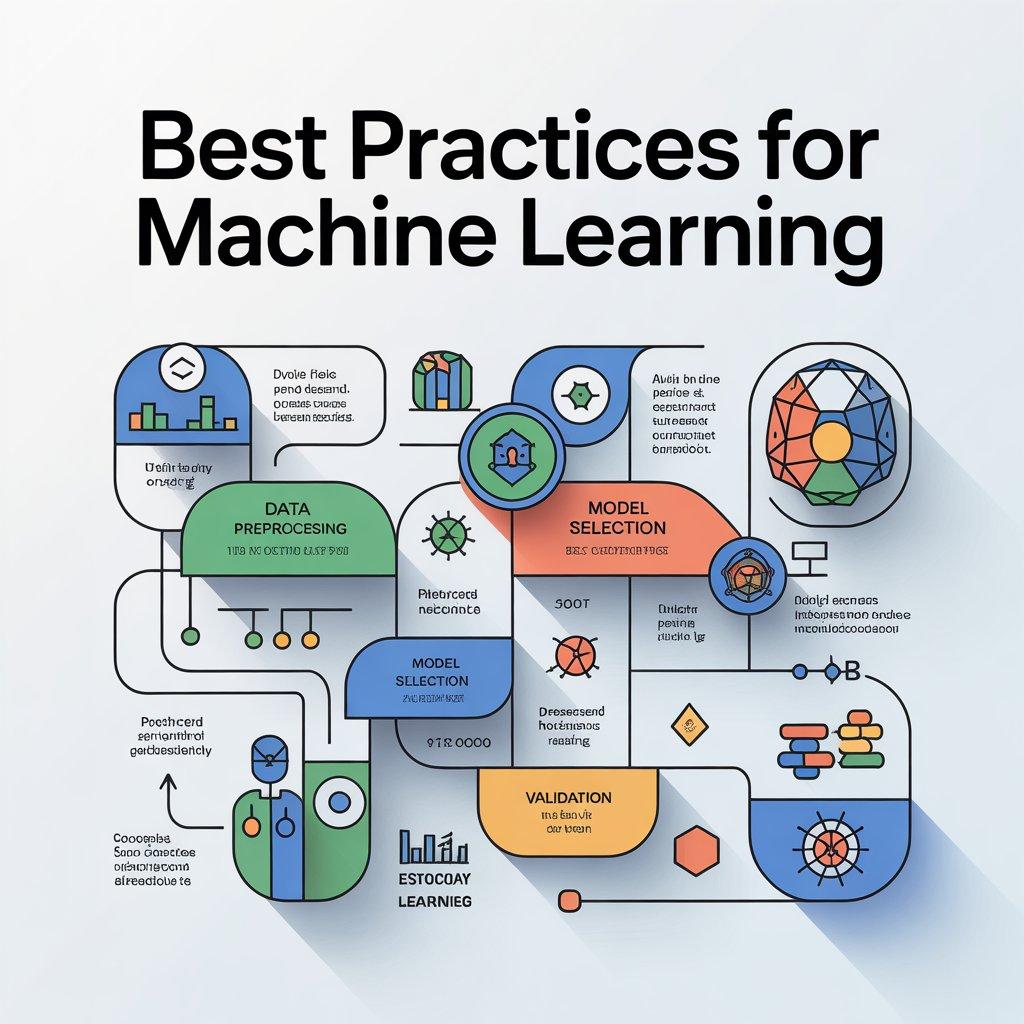
To get the most out of Machine Learning, it’s essential to follow best practices. These include using high-quality data, selecting the right algorithm, and tuning hyperparameters. It’s also important to evaluate models carefully and consider factors such as interpretability, robustness, and scalability. By following these best practices, organizations can unlock the full potential of Machine Learning and achieve their goals.
- Data Preparation: Around 70–90% of ML work is data cleaning and reprocessing.
- Dataset Split: Common split is 70% training, 15% validation, 15% testing (or 80/20).
- Feature Engineering: Proper features can improve model performance by 10–30%.
- Model Evaluation: Good models often target Accuracy > 85% or F1-score > 0.8 (depending on the task).
- Cross-Validation: Use 5–10 folds to ensure reliable evaluation.
- Regularization: Techniques like dropout (0.2–0.5) help reduce overfitting.
Machine Learning in Various Industries
Machine Learning has many applications in various industries, including healthcare, finance, education, and marketing. In healthcare, Machine Learning can be used to diagnose diseases, predict patient outcomes, and personalize treatment plans. In finance, Machine Learning can be used to detect fraud, predict stock prices, and optimize investment portfolios. In education, Machine Learning can be used to personalize learning experiences, predict student outcomes, and optimize curriculum design.
Machine Learning and Data Science
Machine Learning is closely related to data science, which involves the use of data and analytics to gain insights and make decisions. Data science involves a range of techniques, including data visualization, statistical modeling, and machine learning. Machine Learning is an essential tool for data scientists, who use it to analyze and interpret complex data sets and make predictions and recommendations.
Machine Learning and Artificial Intelligence
Machine Learning is a subset of artificial intelligence, which involves the use of machines to perform tasks that would typically require human intelligence. Artificial intelligence includes a range of techniques, including expert systems, natural language processing, and computer vision. Machine Learning is an essential component of artificial intelligence, as it enables machines to learn from experience and improve their performance over time.
Machine Learning and Robotics
Machine Learning has many applications in robotics, including robotic vision, robotic manipulation, and robotic navigation. Machine Learning can be used to enable robots to learn from experience and improve their performance over time, allowing them to perform complex tasks such as assembly, welding, and inspection.
Machine Learning and Natural Language Processing
Machine Learning has many applications in natural language processing, including language translation, sentiment analysis, and text classification. Machine Learning can be used to enable computers to understand and interpret human language, allowing them to perform tasks such as language translation, question answering, and text summarization.
Machine Learning and Computer Vision
Machine Learning has many applications in computer vision, including image classification, object detection, and image segmentation. Machine Learning can be used to enable computers to understand and interpret visual data, allowing them to perform tasks such as image recognition, facial recognition, and object tracking.
The field of Machine Learning is constantly evolving, with new techniques and applications being developed all the time. As the field continues to grow and mature, we can expect to see new and innovative applications of Machine

You must be logged in to post a comment.